Get the App
University of Evansville Student Media · In production · Fall 2026
Four people. Four reasons to carry.
Four strangers enter a medical testing-center waiting room with different histories and different reasons to carry a gun. Fear, prejudice, and misread intentions turn an ordinary wait into a confrontation.
Story by Tommy J. Housman
Screenplay by Autumn Mosley

The cast

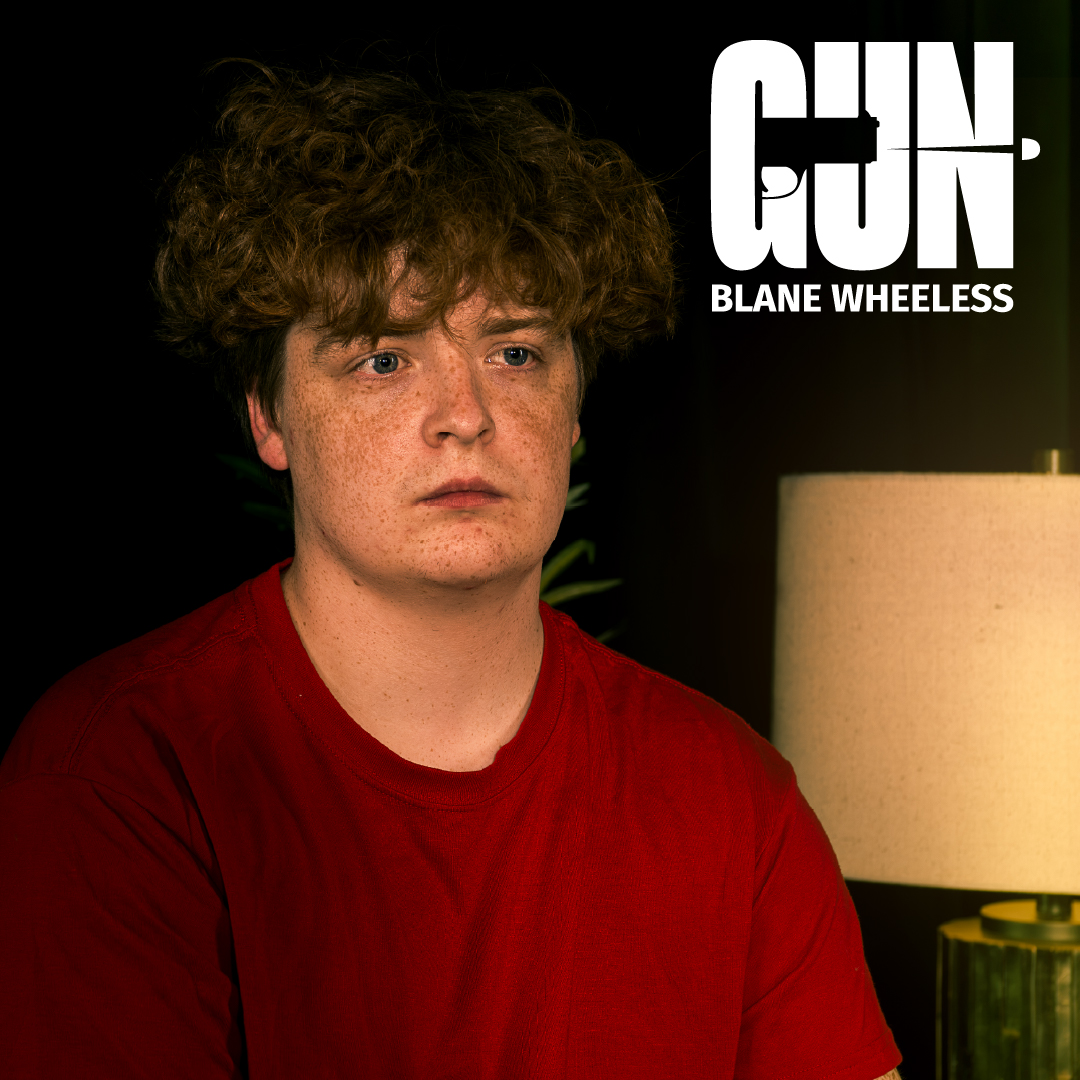


Developed through COMM 345: Video Production, GUN brings students into a collaborative filmmaking process spanning camera work, lighting, set design, editing, sound, photography, promotion, and podcasting. It follows the student-production work of Undergrad and The Switch.
The film uses close-ups, performance, and restrained dialogue to explore how people interpret one another—and how quickly fear can become certainty.
A statement from storyteller Tommy J. Housman.
GUN is a work of fiction examining America’s love affair with firearms—a culture that sensationalizes guns and gun violence while too often dismissing constructive discussion of their consequences.
Reducing gun violence to a mental-health problem leaves the weapons, their availability, and the business of selling them insufficiently examined. A profit-driven industry continues producing millions of firearms each year. Demand for greater ammunition capacity and rapid fire sustains access to weapons capable of killing many people in moments, while advocates of unrestricted ownership frame efforts to limit that capacity as infringements on freedom.
In 2017, the United States had an estimated 120.5 civilian-held firearms for every 100 residents—approximately 1.2 guns per person.
In 2020, 2021, 2022, 2023, and 2024, firearms were the leading cause of death among American children and teens ages 1–17.
In this film, every armed principal character dies. Their different reasons for carrying cannot protect them from fear, prejudice, or another person’s judgment.
The story is fictional. The deaths behind these statistics are not.
What are we protecting when our attachment to weapons becomes stronger than our willingness to confront their consequences?
Statistical context: Small Arms Survey’s 2017 estimate; Johns Hopkins analysis of CDC mortality data. The age range is 1–17, and firearm deaths include multiple circumstances. These are dated figures, not a current ownership count.